Case study
AuditLeads
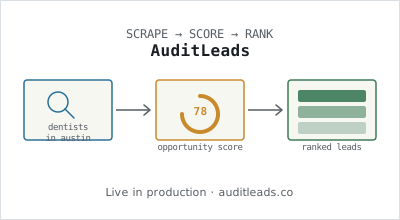
From “dentists in Austin” to a ranked list of prospects with a concrete reason to reach out.
01 Problem
Agencies and freelancers who sell websites and marketing waste hours manually hunting for local businesses that actually need help — then guessing which ones are worth pitching.
There's no fast way to go from “dentists in Austin” to a ranked list of prospects with a concrete reason to reach out.
02 Approach
- AuditLeads scrapes local businesses from Google Maps, visits each one's website, and computes an Opportunity Score from real signals (site speed, missing pages, technical weaknesses).
- The user gets a ranked lead list where a high score means a real, pitchable problem — not a random name.
03 Architecture
- 01 · SERVICES
Two decoupled services: a Next.js app (Prisma/Postgres, NextAuth, Paddle billing) and a standalone Python scraper worker, communicating through a job-queue pattern rather than blocking requests.
- 02 · SCRAPE
The scraper gives each business its own fair-shared timeout so one slow website can't kill an entire batch.
- 03 · METER
Credits are charged only per lead that gets a complete score — never for partial or failed results — enforced with atomic database updates so concurrent searches can't be double-charged or slip through free.